Heh. I should check the forum more frequently – I hadn’t seen this exchange so was just coming at 1130 anyway… Thanks to @The0 for organizing a great workshop and patience with the newbies.
Bedankt voor de workshop, ik vond het erg leuk om mee te doen.
Team SAC (loodvrije legering) had in eerste instantie slechte resultaten. We hebben zitten prutsen met de hotplate met 3 pcb’s erop: veel schuiven en kloten met de te beperkte ruimte, 3x niet-werkend resultaat.
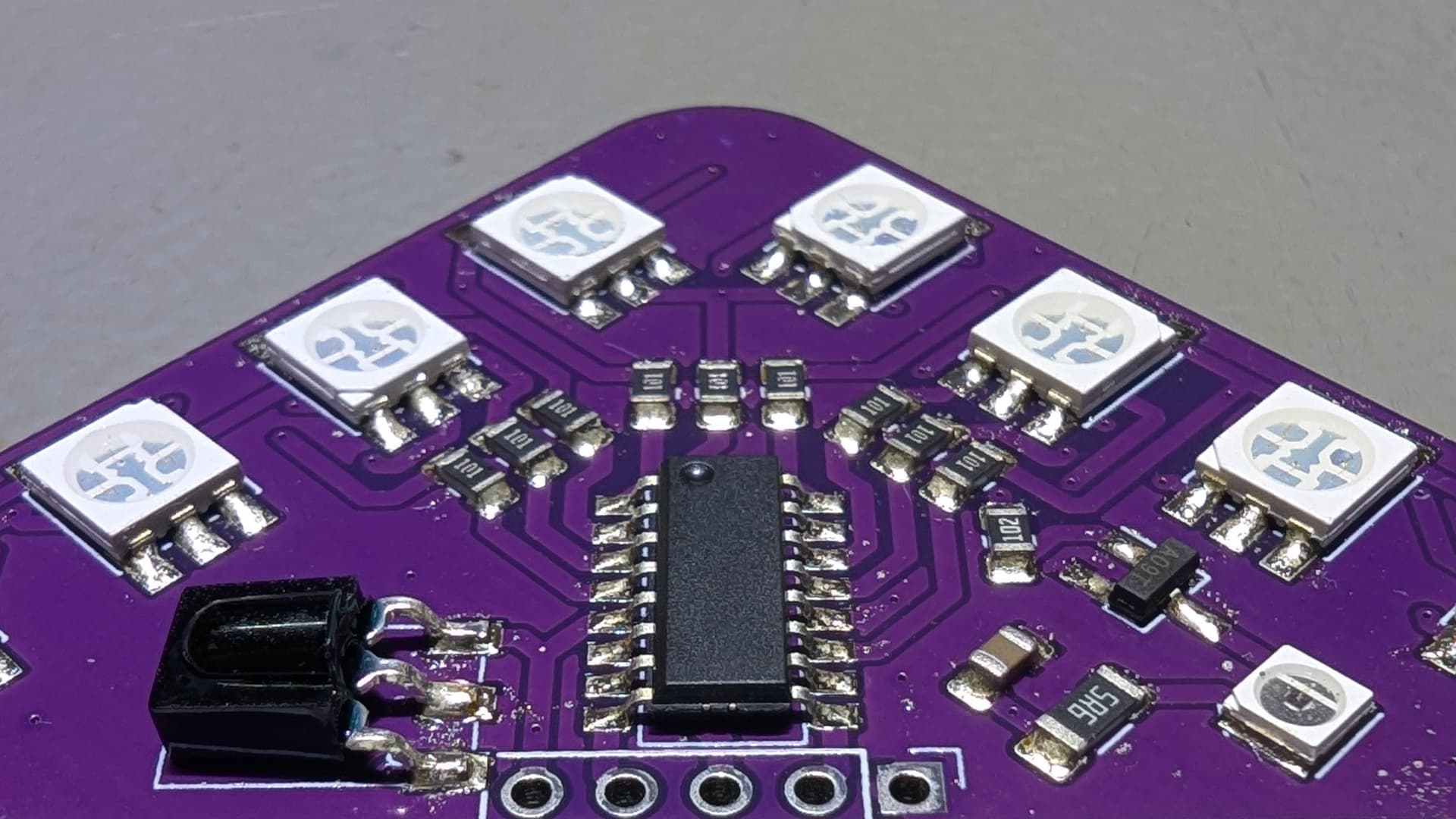
Daarna heb ik het nog eens gedaan, en gewoon op de normale manier met 1 pcb op de hotplate in 't midden. Mijn tweede badge werkte meteen perfect. Gewoon op 240 graden en nadat alles gesmolten was nog een halve minuut laten liggen tot er ook weinig rook meer afkomt (ik denk dat dat betekent dat de flux op is). Dus het kan prima met loodvrij, je moet alleen geen heuvelachtig landschap in je hittecurve hebben 
3 Likes
Thanks, all. Was an interesing & enjoyable event (at least for me). I hope the lead contamination was constrained to one table. At times it was a bit chaotic, but I think it worked out.
Personally, I was pleasantly surprised by the performance of the bismuth-tin alloy low melting point solder. I had tried it before at 200 degrees, and was a bit disappointed - not enough flux activity to clear oxide off pads, and lots of small solder ball debris on the PCBs. The people who did the game using this solder had excellent results at 160 degrees on the large stove. I just checked the specs of the solder - melting point is 138 degrees (and not 158 degrees as I mistakenly remember), so the stove was presumably ~22 degrees above the melting point. This makes me think that my previous experience was wholly due to the temperature being too high and presumably the flux being too active for too short a time to decently reflow.
Downside of the bismuth tin solder may be the more agresssive smoke it gives off.
Juerd: great that it worked out in one go the second time. In the photo there seem to be some little balls of solder lying around, and a few pins on the top-left LED als show signs of not being soldered perfectly (oxide layer?) - This is also what happened (but much worse) when I used my bismuth-tin solder at 200 degrees, and this (to me) suggests that it may be worthwhile to try it again at slightly lower temperature (like 235 or even 230). With the lead-tin solder I use (at 220) the joints generally look nicer and there is less debris/
Regarding the two two games with lead-free tin (cu/ag) solder: It may be that there was too much tin around some pads, forming shorts. It’s the first time I’ve seen this. What I’ve seen with lead-based solder is the excess solder balling up on the pad and lifting the LED off the board slightly, In general this also helps surface tension center the led unless there is a large difference in the amount of tin on each pad - in which case it can “skew” the led.
There is more solder in part because pads are larger than the pads in the recommended footprint because I designed them that way: larger pads facilitate (manual) rework if necessary, and help surface tension center the leds on their pads. I could order thinner stencils to reduce the amount of solder or stencils with holes smaller than the pads. I might give it a try.
Overall (if I counted correctly) the status with the game PCBs yesterday was: two lead/tin, working after rework (skewed LED), three (four?) bismuth/tin, working without rework and two tin(Cu/Ag) not working (evenafter applying extra flux). Counting the PCB’s I have left, overall (bornhack/revspace/..) 45 LED PCBs have been made, of which 43 work.
until next time!
3 Likes
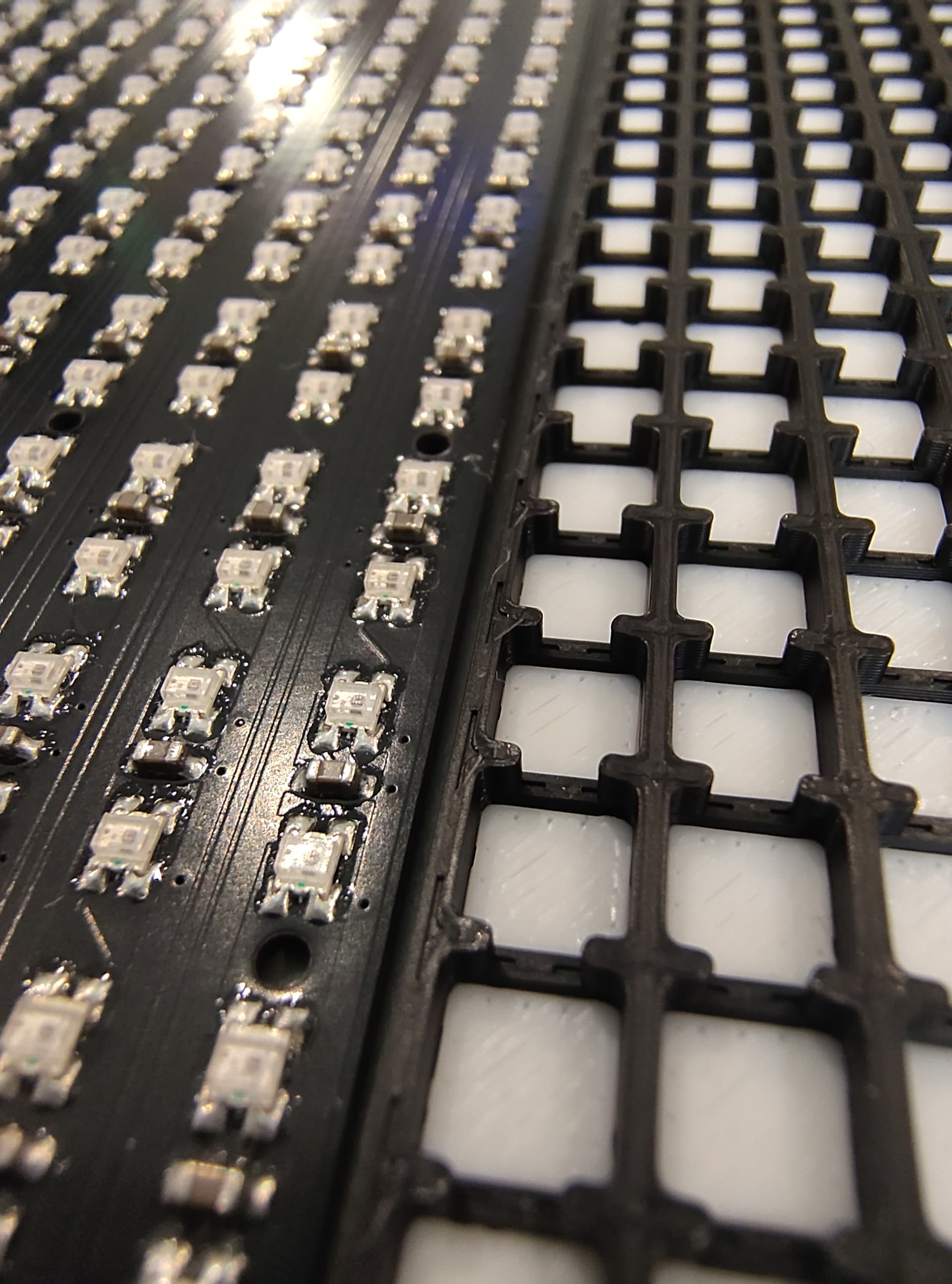
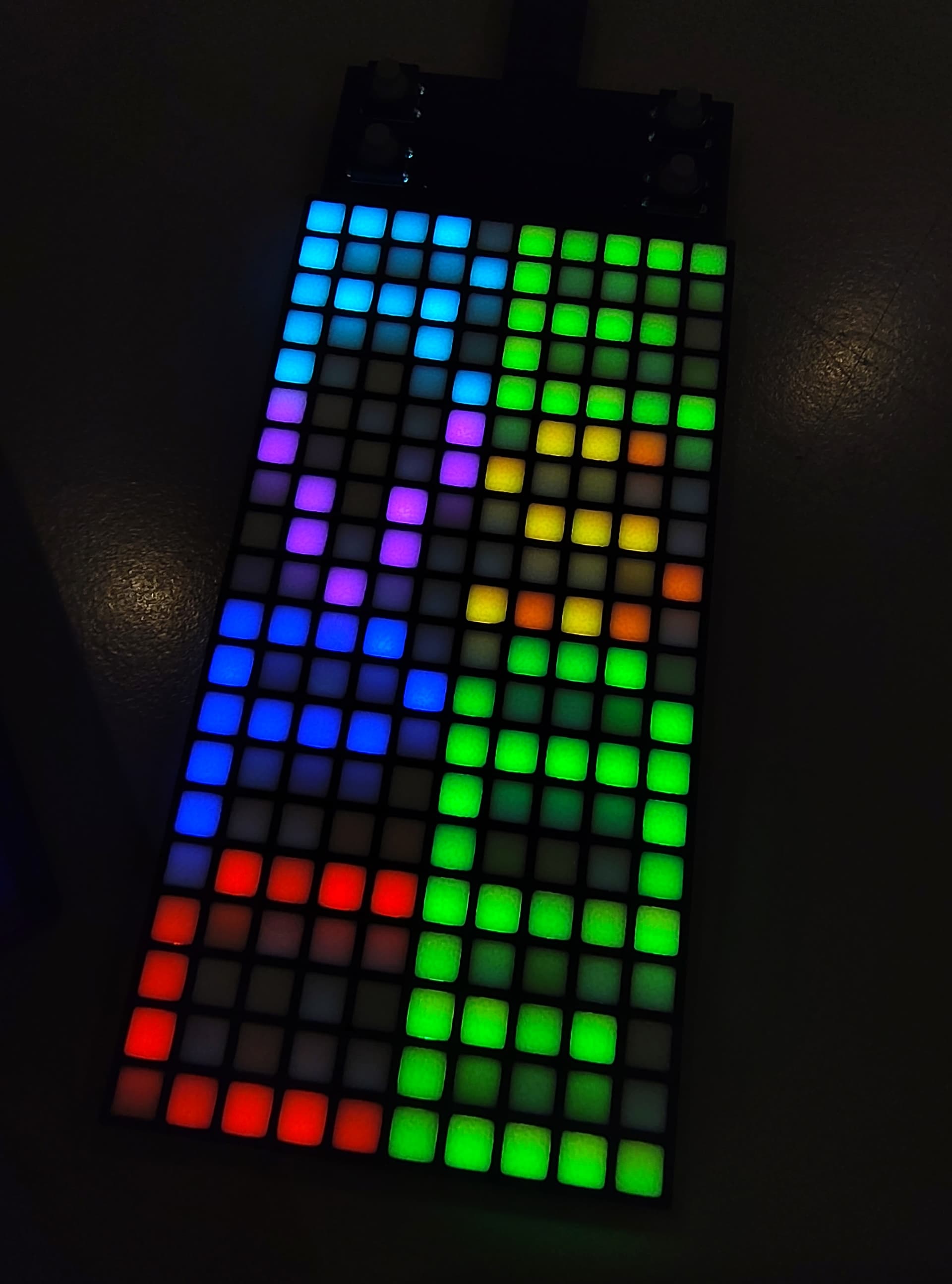
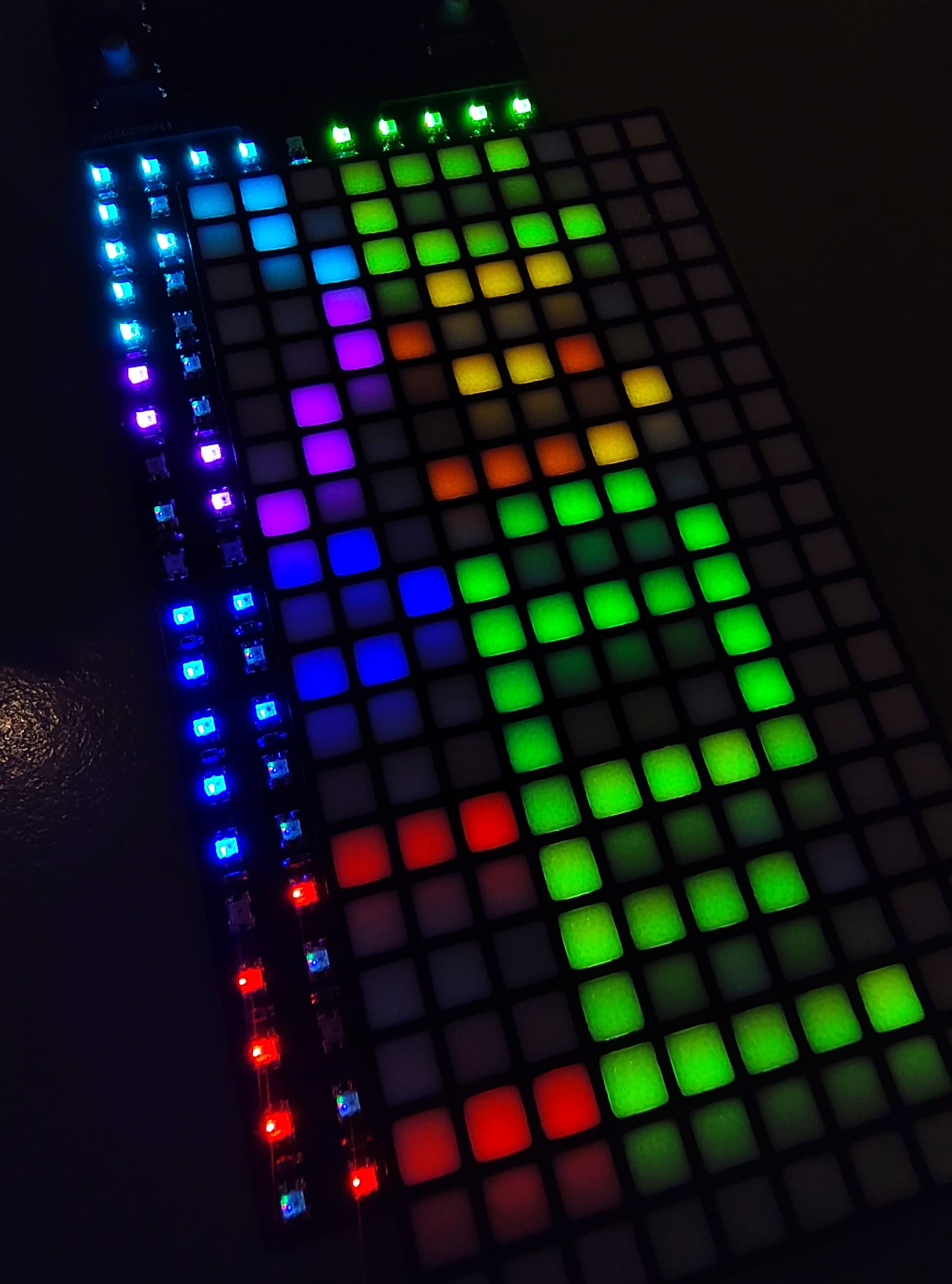
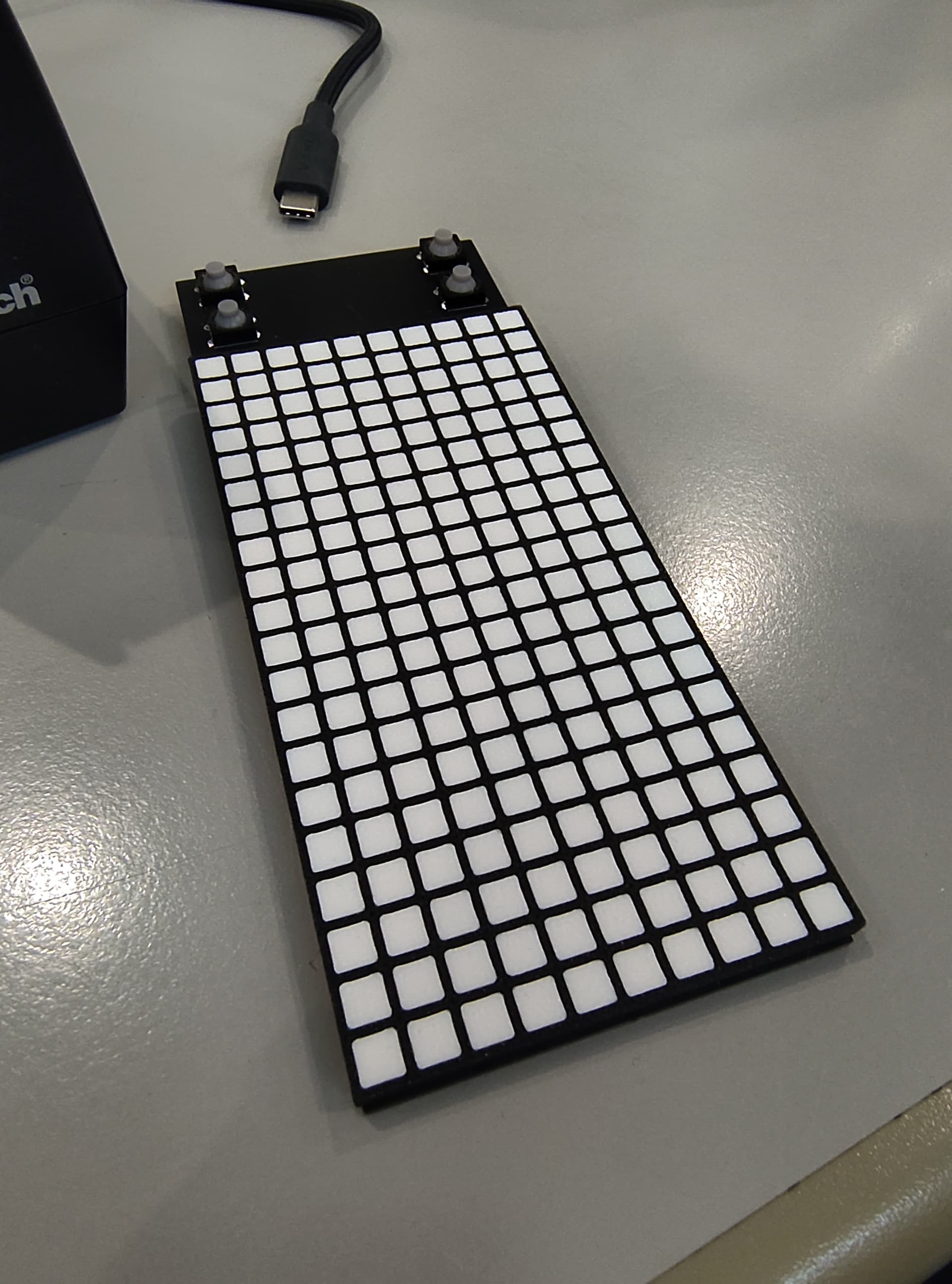
Begonnen met een case te maken voor het ‘blocktris’ PCBtje. Zwart PLA, en 5 laagjes wit PLA. Werkt goed 
5 Likes
cool. heb zelf ook al eens met een diffusor ervoor gespeeld. waarschijnlijk wil je de helderheid met diffusor behoorlijk wat opschroeven. Helaas is daar in de huidige code geen generieke optie voor anders dan het hercoderen van de kleurcodes in de PALETTESUPPORT section. Daar zit wel een generieke functie in om een 8 bit waarde om te zetten naar een 32 bit “bitbangpatroon”, en een functie om een nieuwe entry 3 van die 32 bit patronen in het palette te stoppen, dus de aanpassing die nodig is is triviaal, maar op dit moment is het hardcoded.
1 Like